Large scale paintings
She-Wolves / Wilczyce
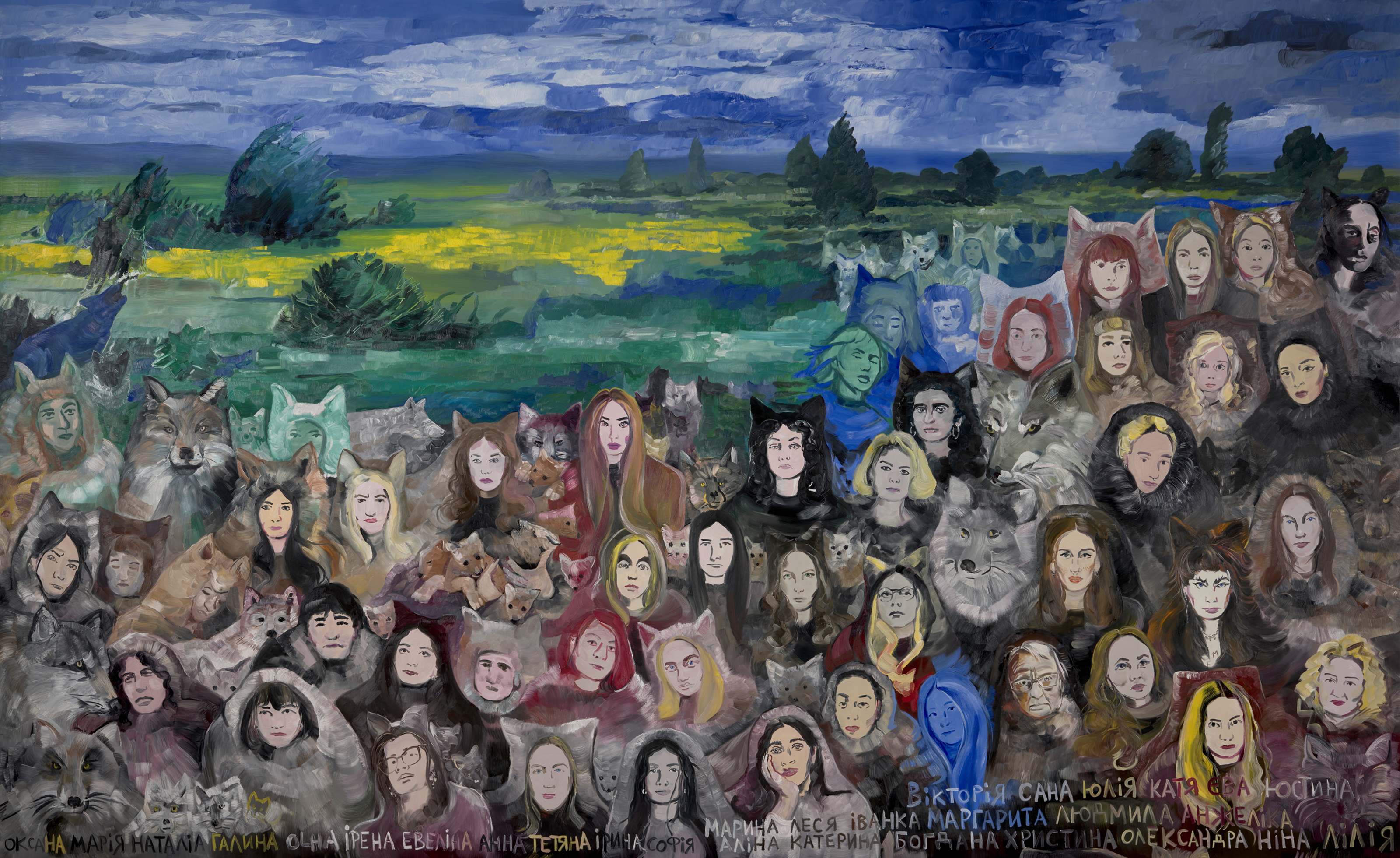
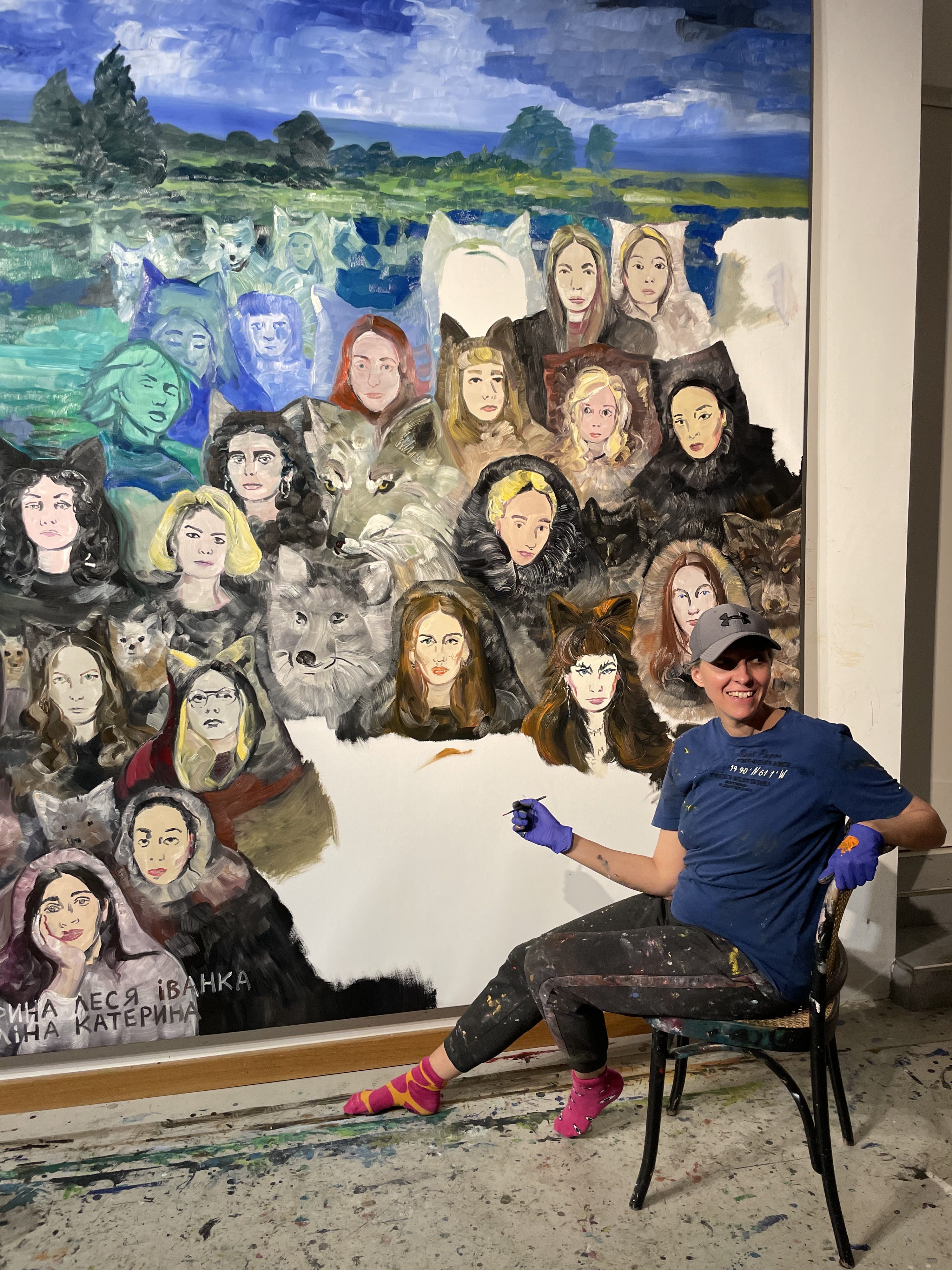
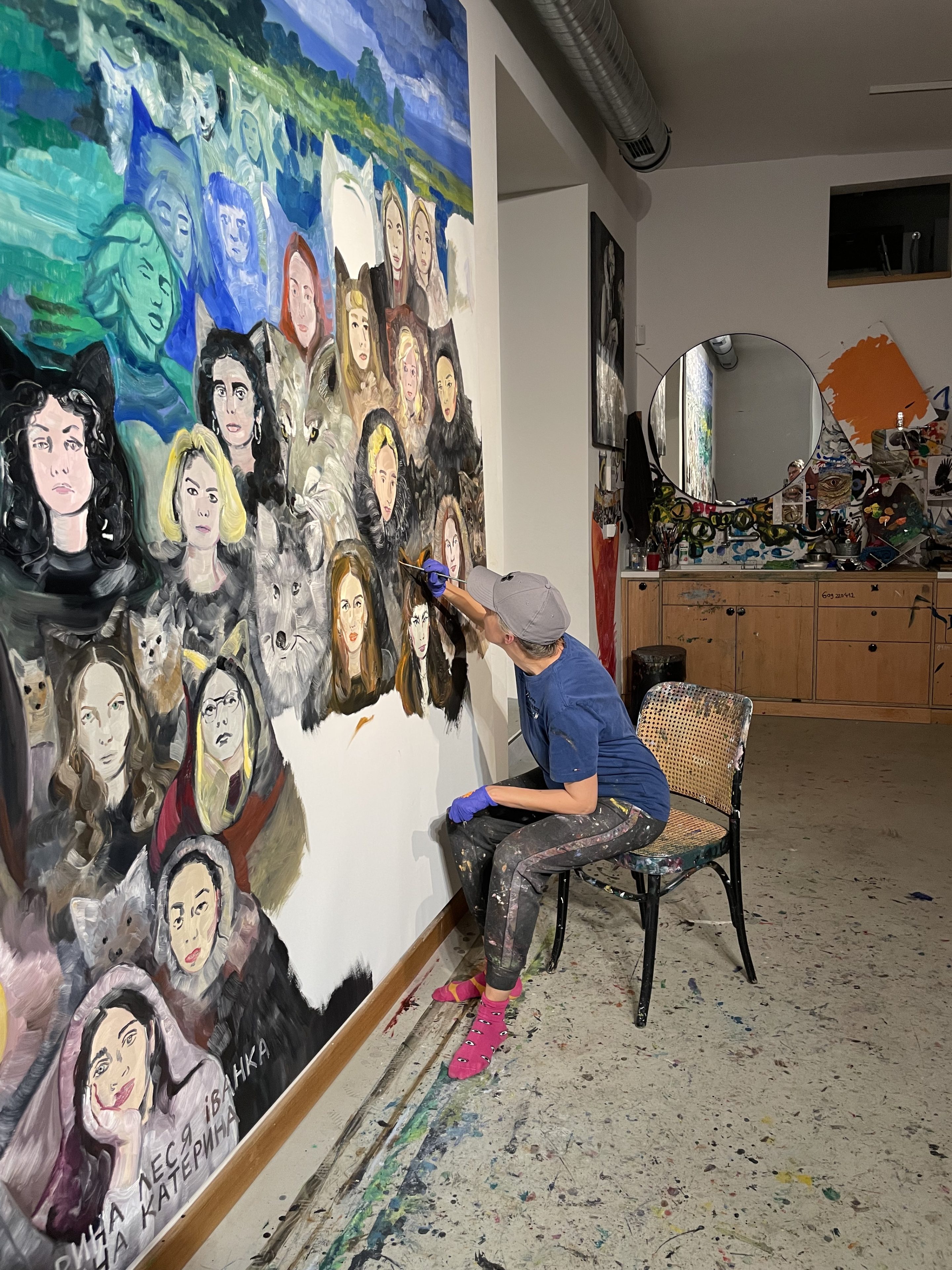
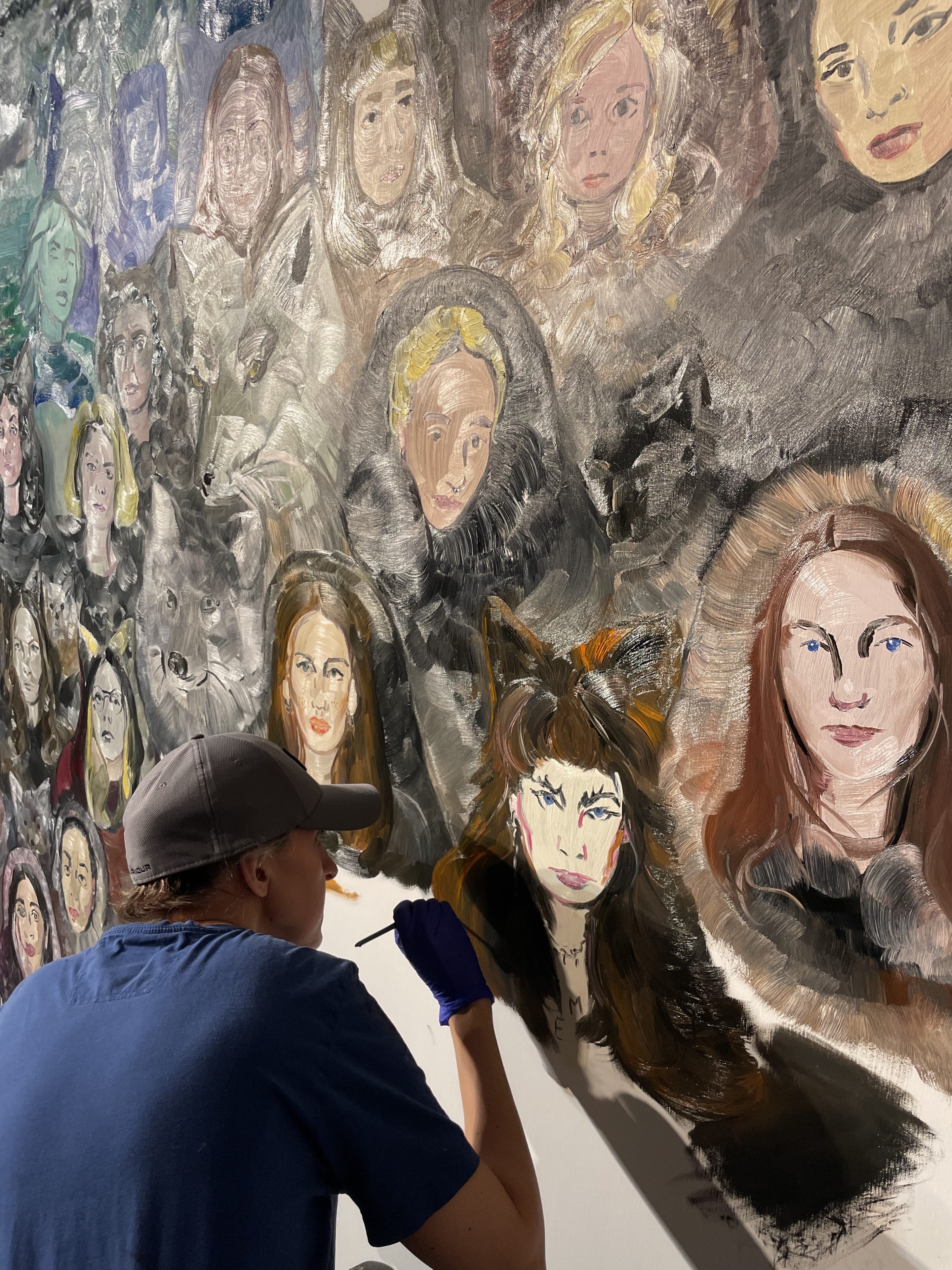
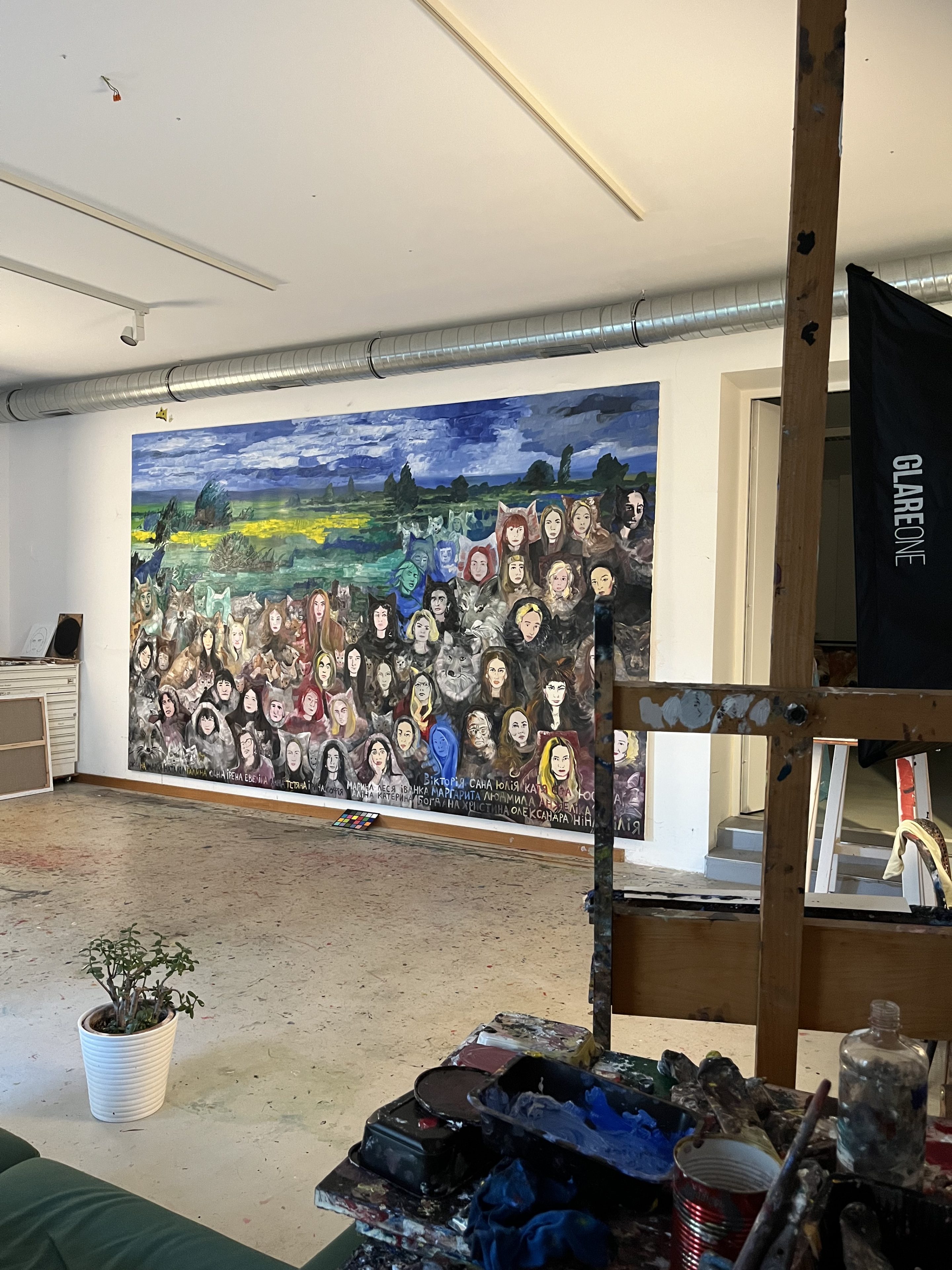
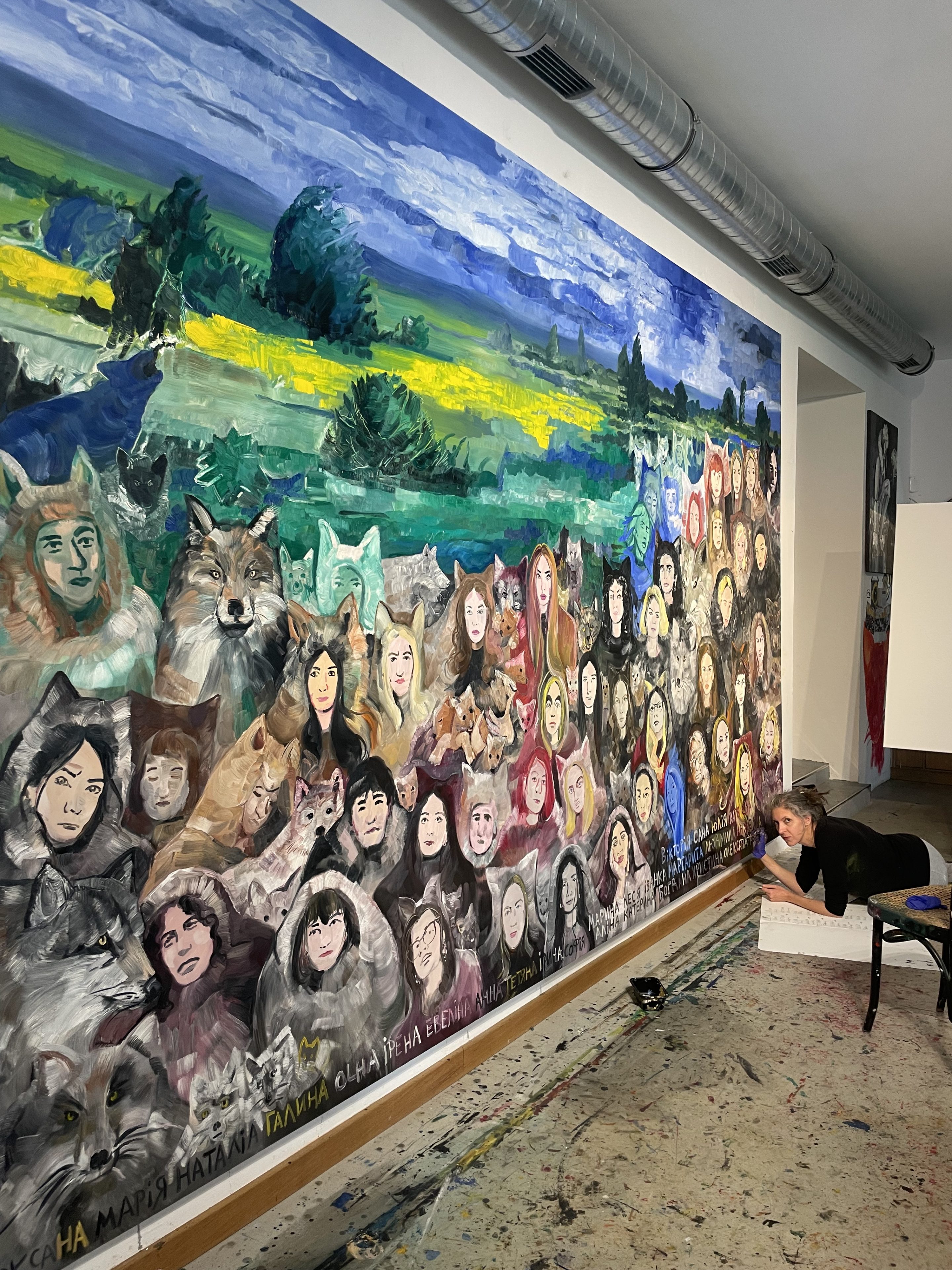
The painting depicts a large group of Ukrainian women looking directly at the viewer against the landscape of eastern Ukraine.
All of the women portrayed are real people. They include artists (among them Kateryna Aliinyk, Alina Kleytman, Yulia Krivich, Kateryna Lysovenko, and Sana Shahmuradova Tanska), as well as my collaborators, friends, friends of friends, and their sisters, mothers, daughters, and cousins. I obtained the consent of all the living women to include them in the painting. The only exceptions are Margarita Polovinko and Wiktoria Amelina, two artists who were killed as a result of the war in Ukraine.
The decision to portray specific living individuals lies at the core of this work. I want the painting to remind viewers that war affects real people. The direct, unwavering gaze of more than forty She-Wolves meets the viewer’s eyes and confronts them. The monumental scale of the work is equally essential. Once you stand in front of the canvas, it is impossible to escape the gaze of the She-Wolves.
The first names of the women are written in Ukrainian along the bottom edge of the canvas. Although many of the women share the same first name, each name appears only once. Towards the right-hand side of the composition, towards the east, the number of depicted women, as well as the number of names, gradually increases, suggesting that there are more she-wolves further east.
Ukraine, Poland, Belarus, and the surrounding region are the natural habitat of the wolf. The she-wolf costumes endow the group of women with the wolf’s predatory nature, symbolising their bravery, ferocity, and resilience. At the same time, the animal costumes protect the painting from pathos and excessive sentimentality. Some of the women appear to be dressed more like cats, a more traditionally feminine animal.
Norblin
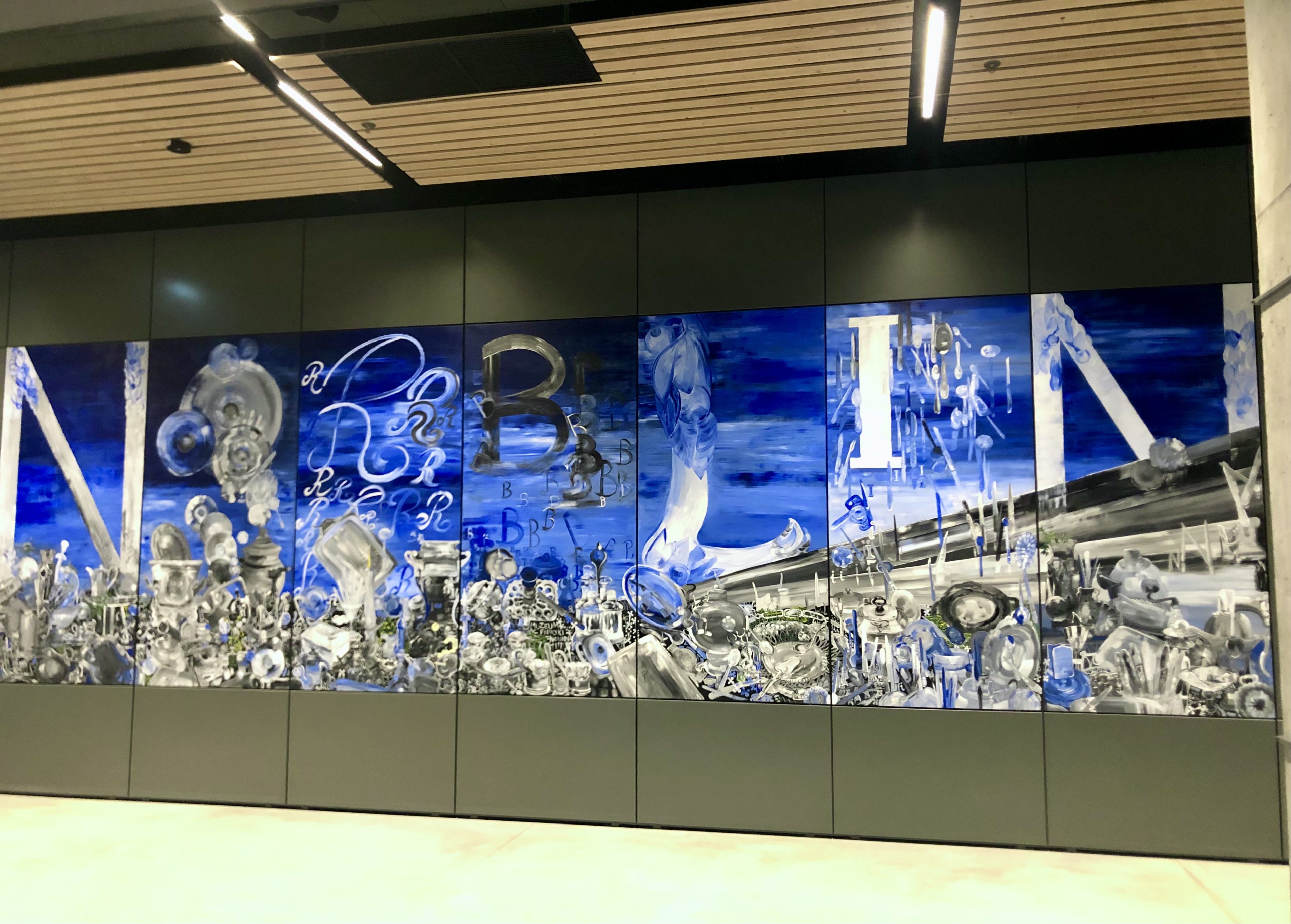
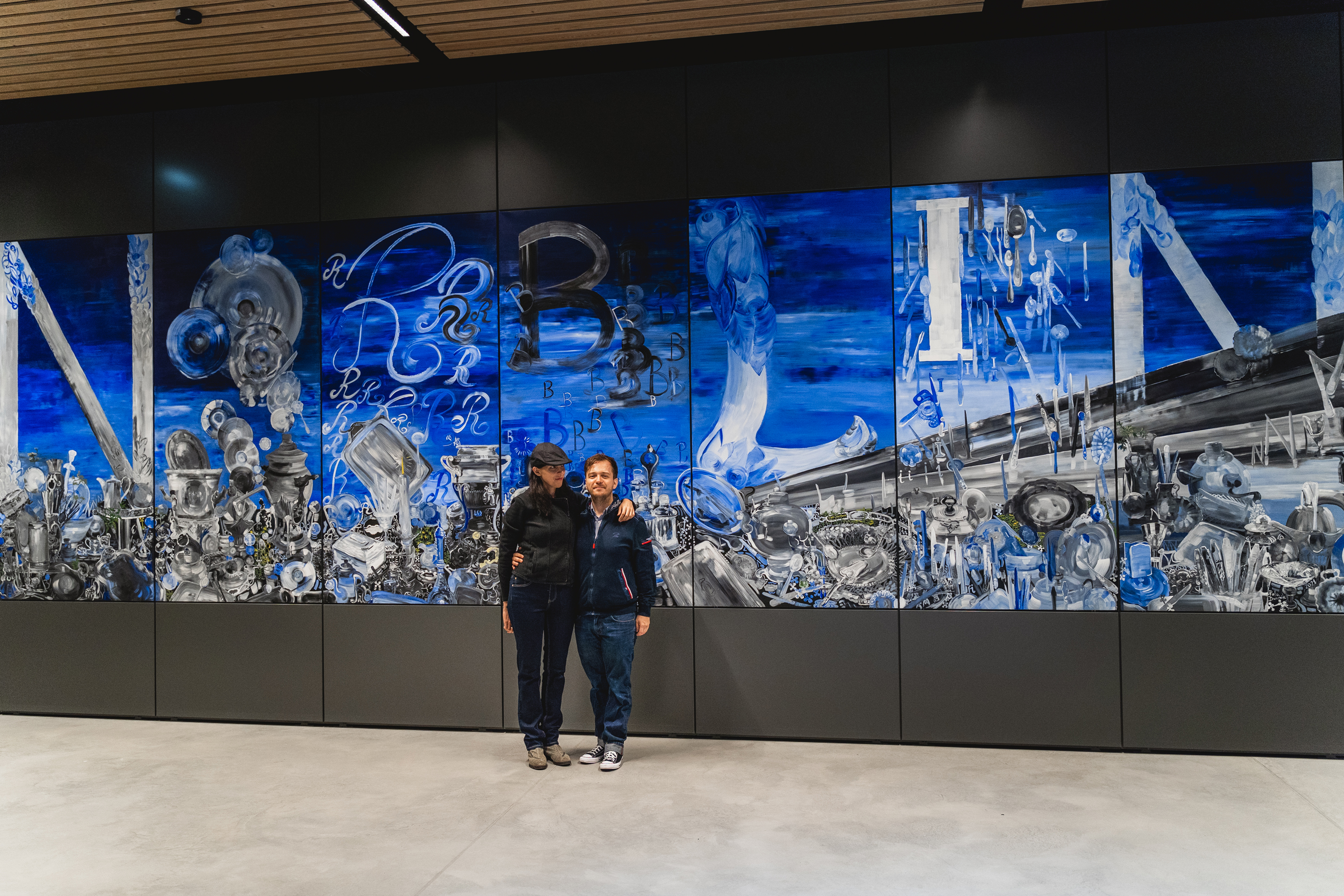
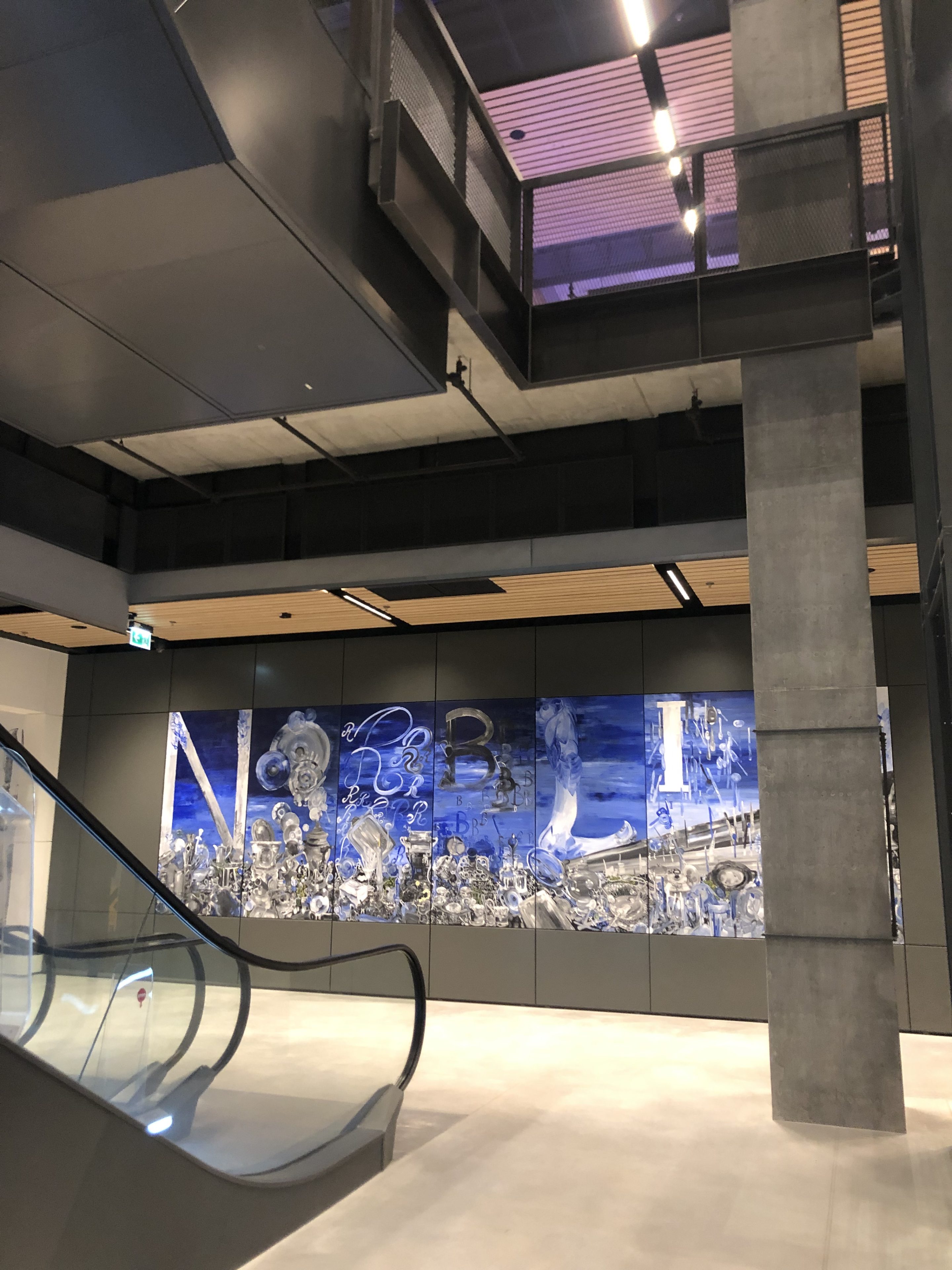
In 2021, the Norblin Factory Museum commissioned Pola Dwurnik to create a monumental site-specific painting. The artist executed the work on seven metal panels forming the cladding of one of the walls in the passageway on level -1 of the Norblin Factory.
Each panel is dedicated to one of the letters in the name “Norblin” and features historical products manufactured at the factory, including vessels, cutlery, silver-plated wares, silver objects, as well as rails and metal prefabricated components. Today, most of these objects are part of the collection of the Norblin Factory Museum.
The Great Nocturne
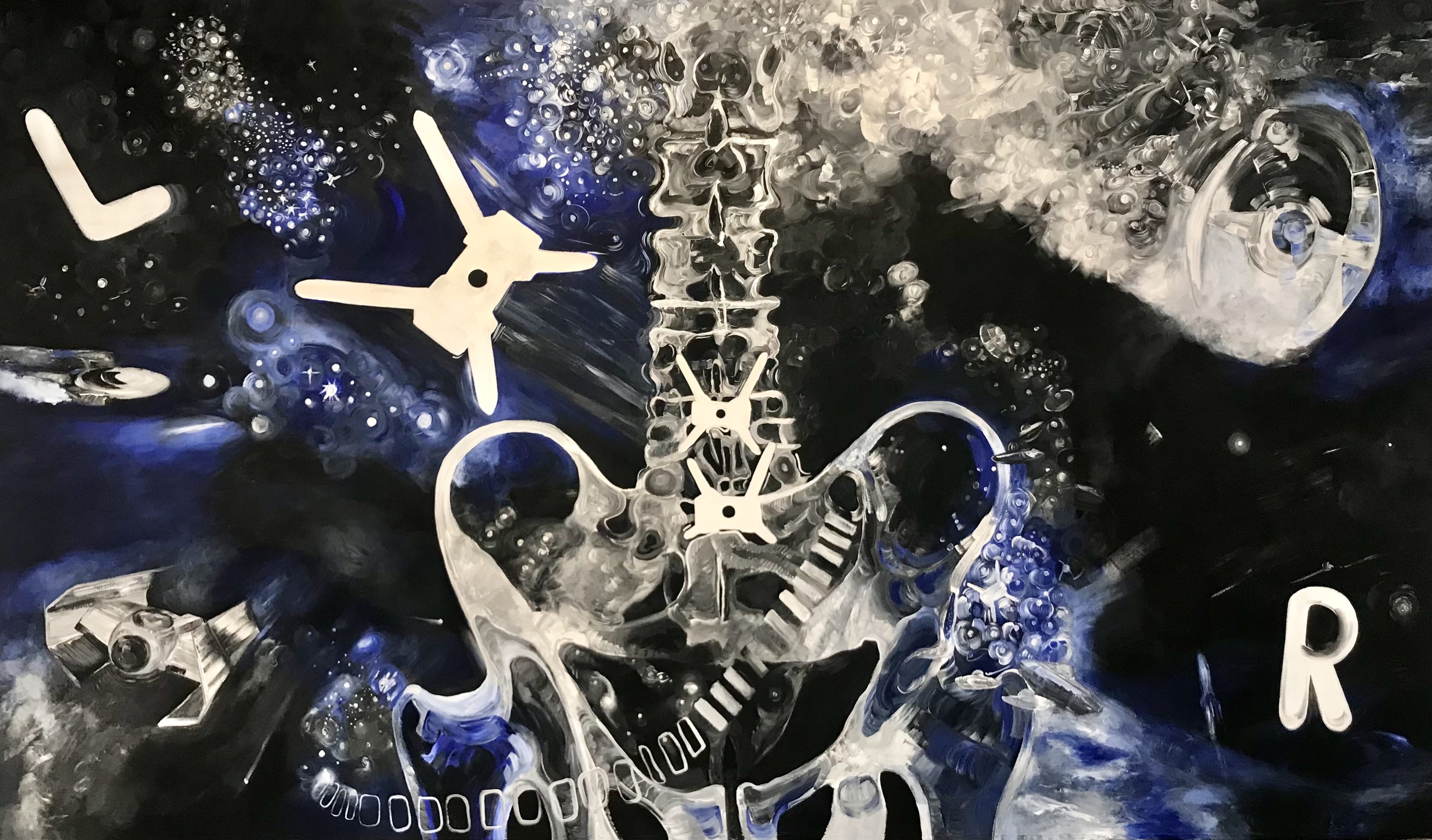
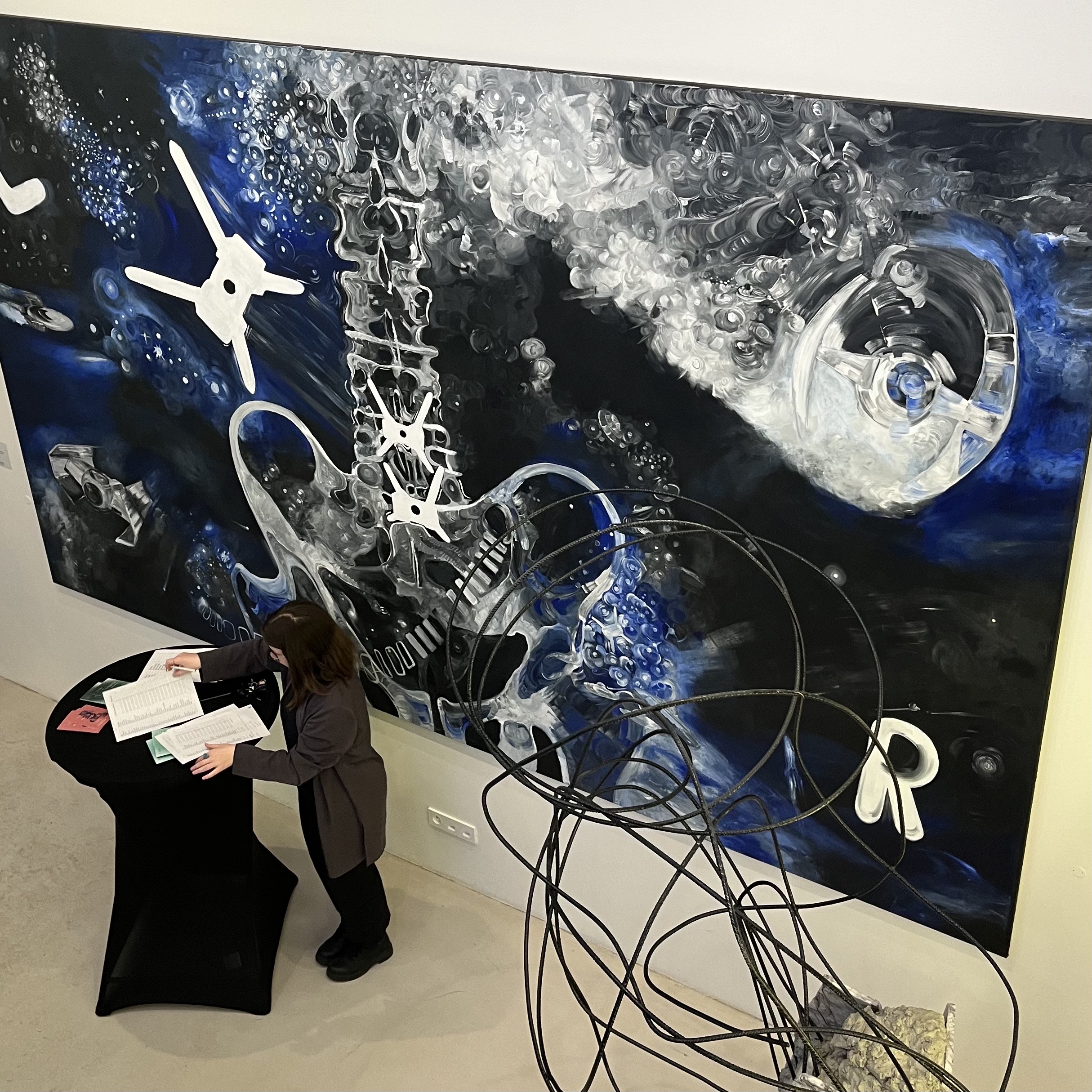
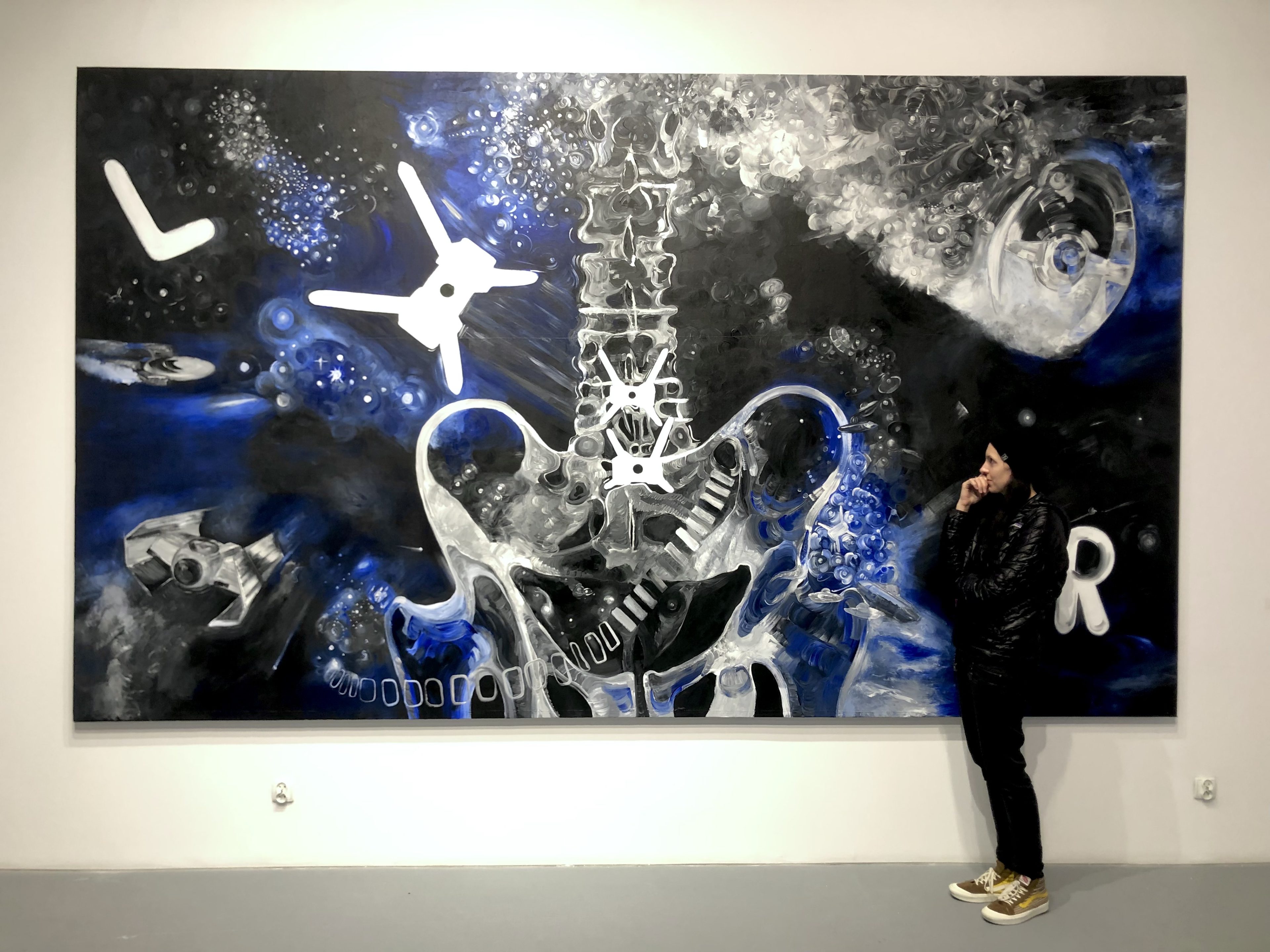
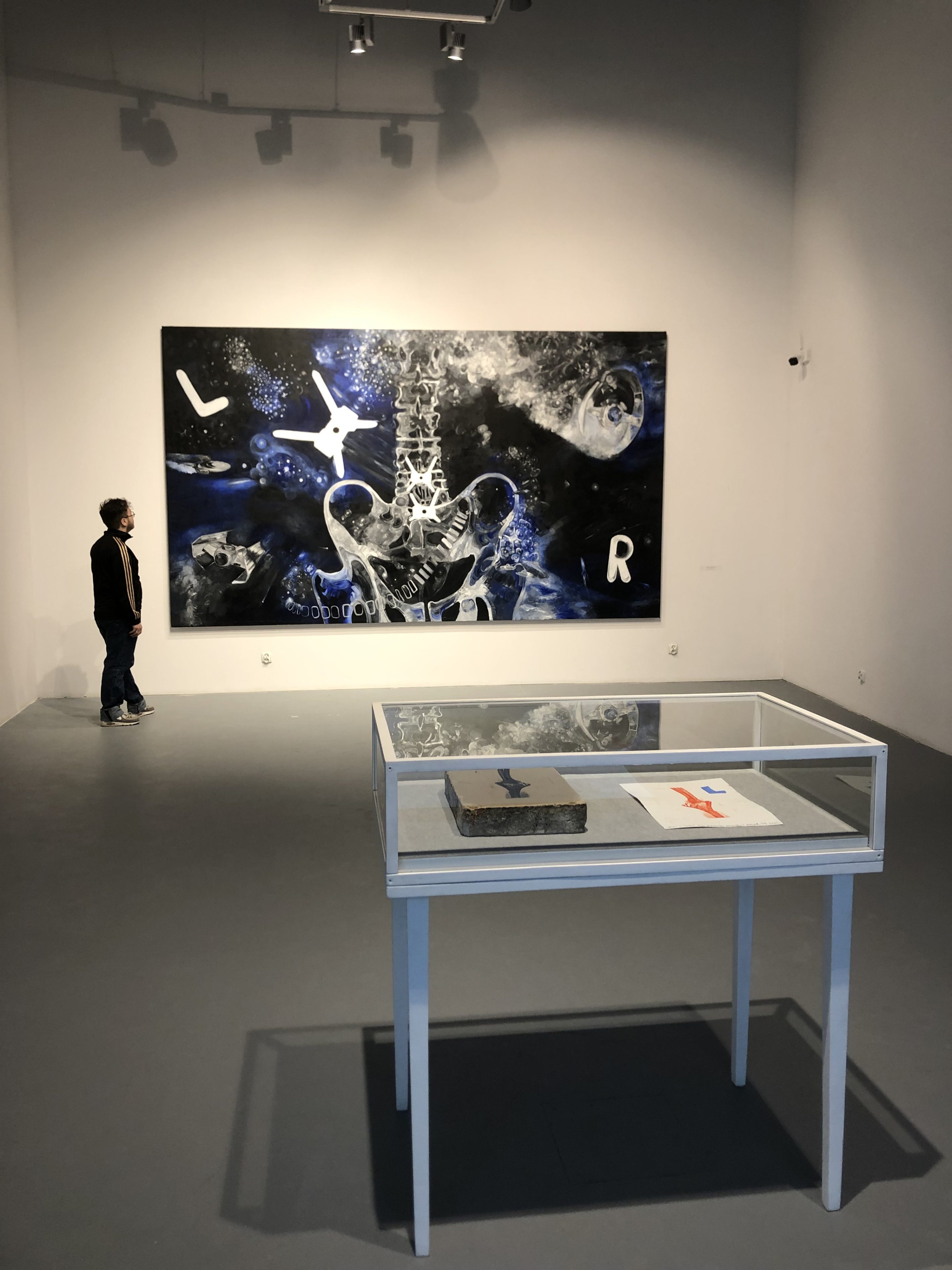
The Great Nocturne is the largest painting in the Nocturnes series, which is based on X-ray images of the human body. The starting point for this work was an X-ray of the lumbar spine of one of the patients of a Swiss orthopaedic surgeon whom Pola Dwurnik met in 2002 and who holds her work in high regard.
The canvas is an imaginative vision of outer space, in which the metal implants stabilizing the patient’s spine are transformed into spacecrafts from Star Wars. Among the objects drifting through the cosmic expanse, one can also recognize the iconic “Spodek” (“Saucer”), Katowice’s distinctive sports and entertainment arena.
Félicité’s Parrot
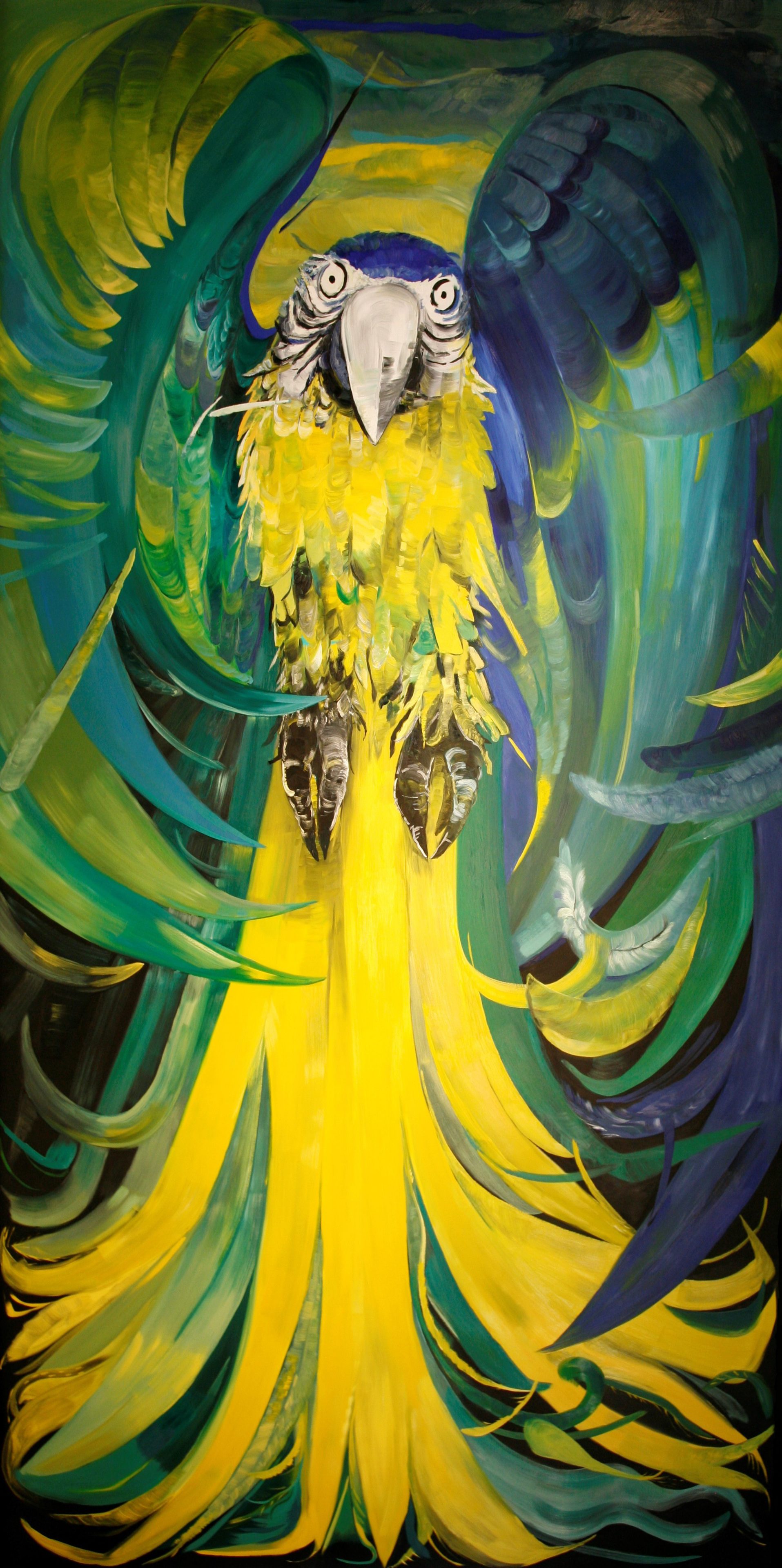
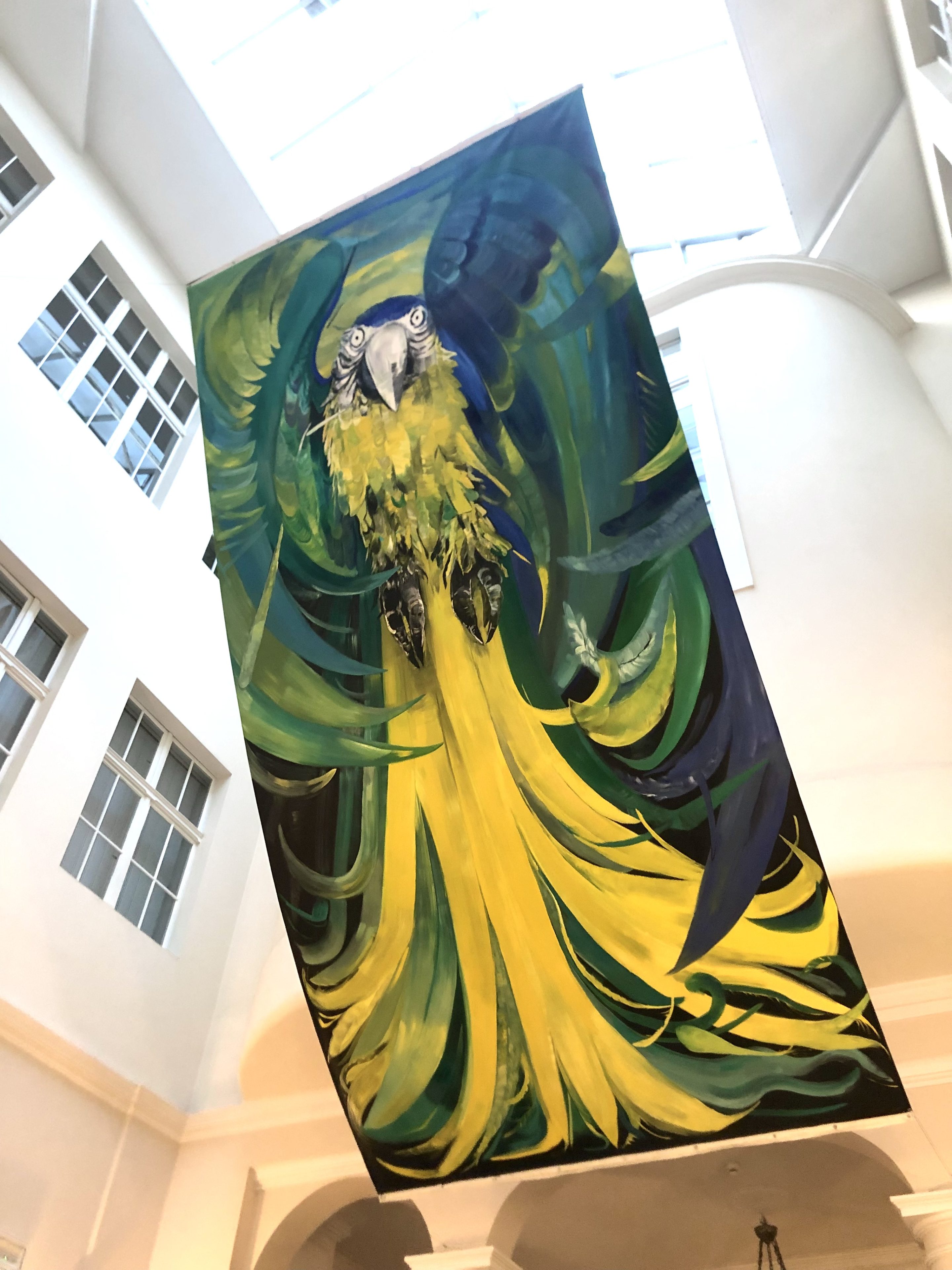
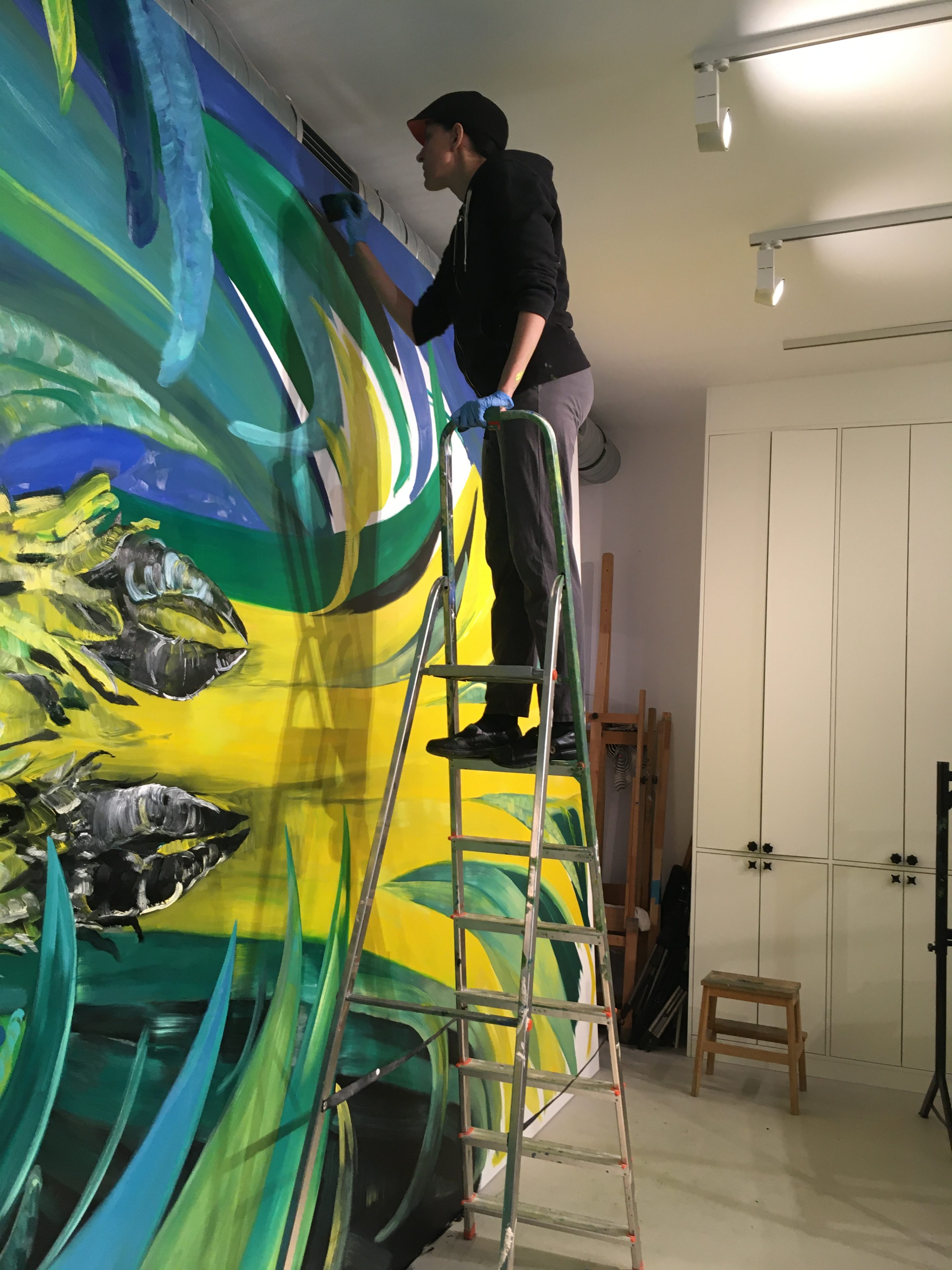
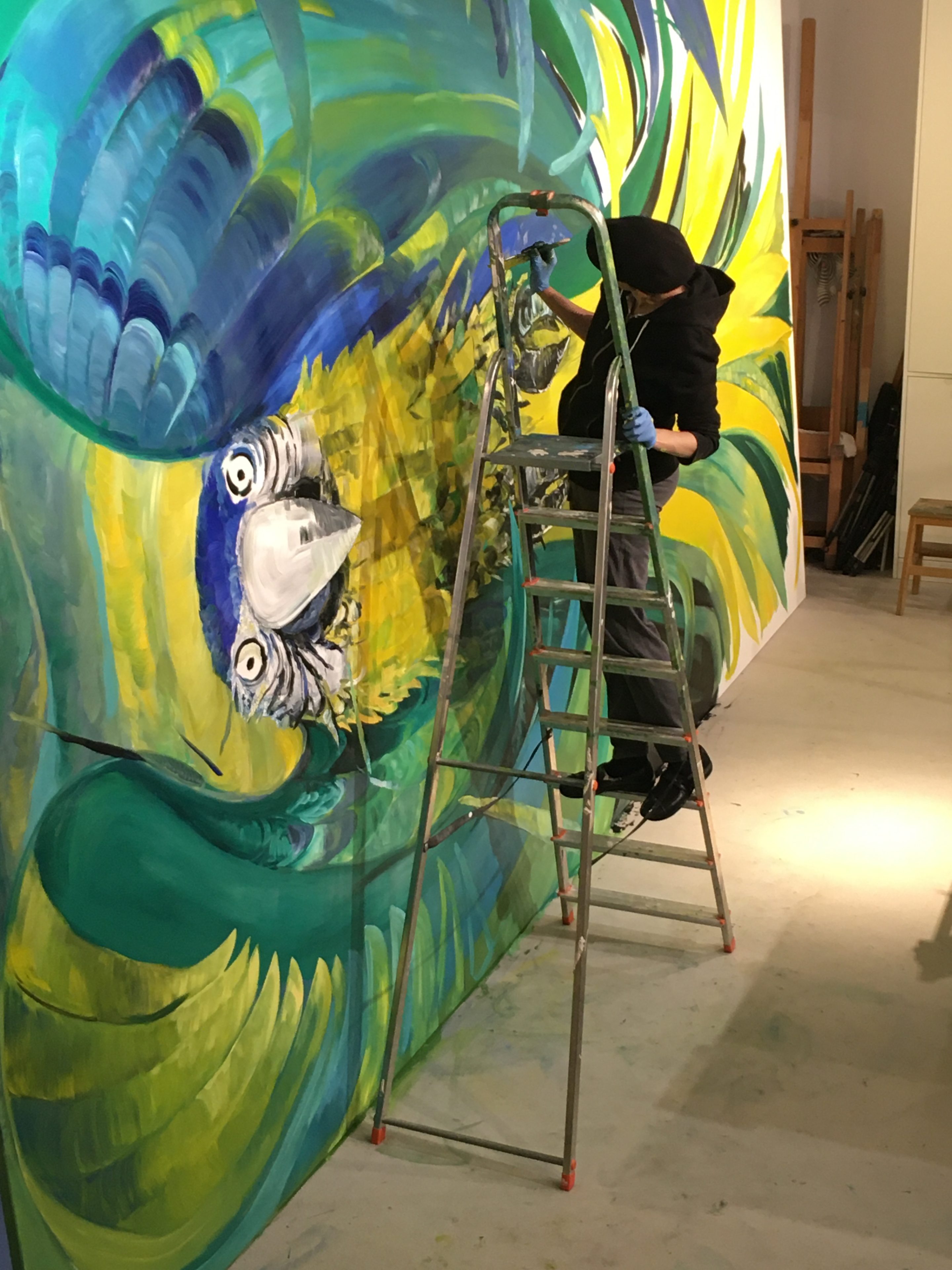
The monumental painting Félicité’s Parrot depicts the parrot from Gustave Flaubert’s short story A Simple Heart, first published in 1877 as part of the collection Three Tales. Félicité, a humble and devoted servant, receives a green parrot named Loulou as a gift. The bird becomes her only companion. Many years later, as Félicité lies dying, she has a vision of a gigantic parrot hovering above her, opening the gates to another world.
The painting captures this very vision and the mysterious moment of passage. The small green Loulou, occupying the centre of a lonely person’s microcosm, is transformed into the Great Cosmic Parrot; a visitor from another dimension, an incomprehensible deity, and a strange, otherworldly being.
From 2021 to 2025, the painting was displayed in the entrance hall of the Sosnowiec Museum.